
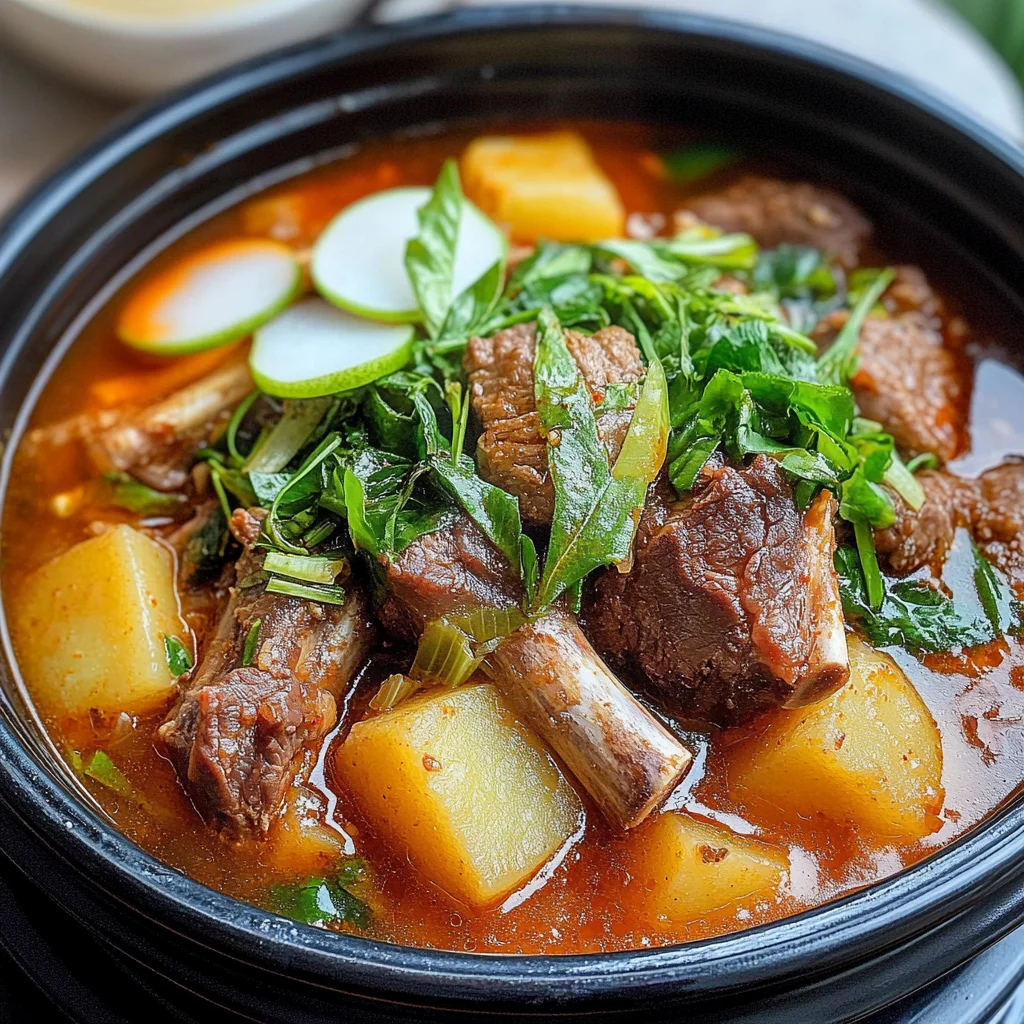
Gamjatang (beef Bone Soup) is a flavorful and hearty dish that warms the soul. This spicy soup features tender beef bones, hearty potatoes, and aromatic spices, making it a perfect choice for family gatherings or cozy nights in. With its rich umami flavor and delightful kick, Gamjatang is sure to impress both seasoned cooks and newcomers alike.
Why You’ll Love This Recipe
- Bold flavors: The combination of spices and ingredients creates a robust taste that excites your palate.
- Nourishing comfort food: Packed with nutrients from the beef bones and vegetables, this soup is both satisfying and wholesome.
- Versatile serving options: Enjoy it alone or pair it with rice for a fulfilling meal that’s great for any occasion.
- Easy to prepare: With straightforward steps, you can whip up this delicious soup without any fuss.
- Authentic experience: This recipe gives you a taste of traditional Korean cuisine right in your own kitchen.
Tools and Preparation
To make this delightful Gamjatang (beef Bone Soup), you’ll need some essential kitchen tools. Having these will streamline your cooking process.
Essential Tools and Equipment
- Large pot
- Knife and cutting board
- Spoon for stirring
- Measuring spoons
- Mixing bowl
Importance of Each Tool
- Large pot: Essential for simmering the beef bones and ingredients together to develop deep flavors.
- Knife and cutting board: Necessary for chopping vegetables and preparing your ingredients efficiently.
- Spoon for stirring: Helps to mix the seasoning paste thoroughly into the soup, ensuring even flavor distribution.
- Measuring spoons: Important for accurately measuring spices and sauces to create the perfect balance in your dish.
Ingredients
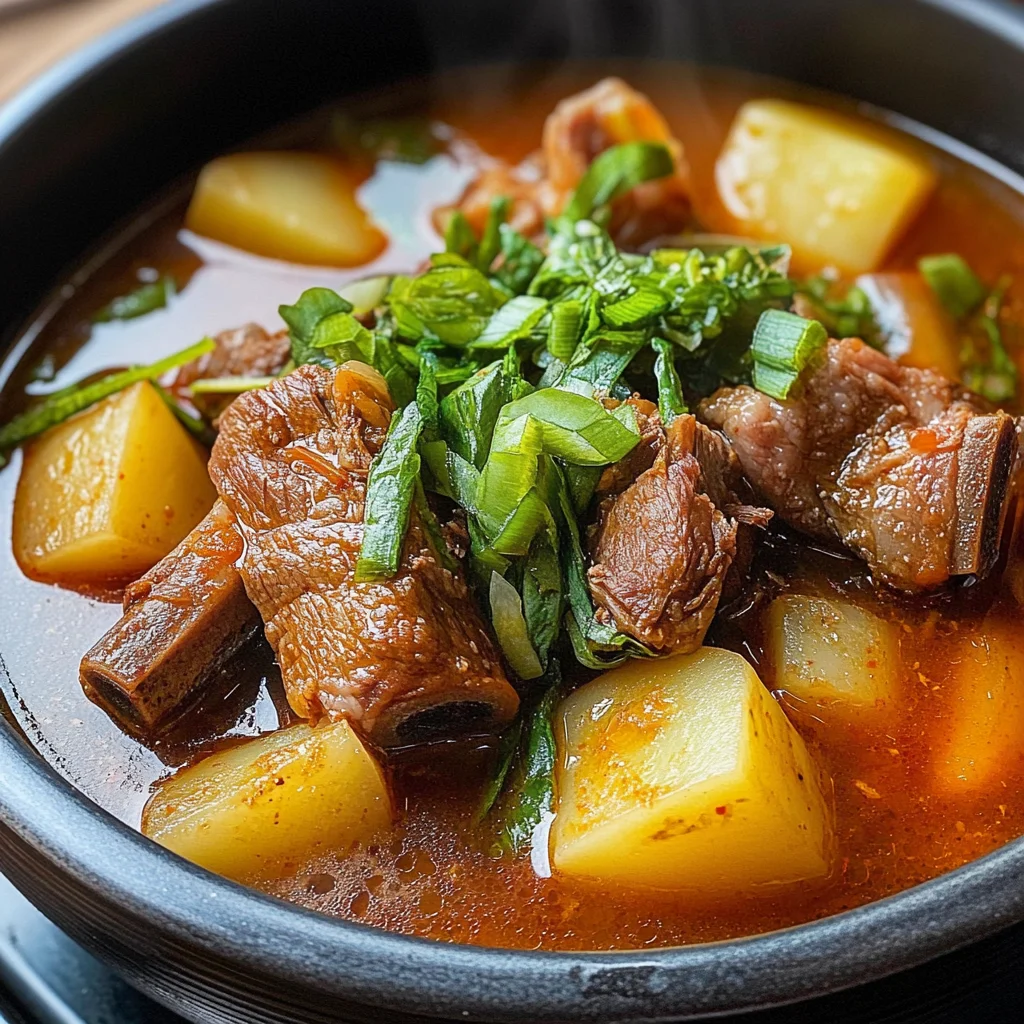
Gamjatang is a spicy soup made with tender & savory beef bones, potatoes, spices, and perilla leaves.
For the Soup Base
- 2 lbs beef neck bones
- 8-10 cups water
- 2 tbsp doenjang (fermented soybean paste)
- 1 oz sliced ginger (or 3 bay leaves)
- 1 small onion
- 1 dried shiitake mushroom
For the Vegetables
- 1 daepa (large green onion) (or 2 green onions)
- 10 perilla leaves
- 1 large russet potato (peeled & cut into 6 pieces)
- 1/2 lb young radish greens (or napa cabbage)
- 1 serrano pepper (or Korean spicy pepper if you can find it)
For Flavoring
- 4 garlic cloves (minced)
- 2 tbsp gochugaru (Korean red pepper flakes)
- 1 tbsp gochujang (Korean red pepper paste)
- 2 tbsp fish sauce
- 3 tbsp perilla powder
- 1/2 tsp black pepper
- 1 tbsp plum syrup
- 1 tbsp Knorr chicken bouillon
- 2 tbsp water
How to Make Gamjatang (beef Bone Soup)
Follow these simple steps to create your very own Gamjatang.
Step 1: Soak the Beef Neck Bones
Soak the beef neck bones in cold water for an hour, changing the water once or twice. This helps to remove impurities.
Step 2: Prepare Your Ingredients
Meanwhile, prepare the minced garlic, chopped green onion, sliced ginger, sliced onion, and washed young radish stems.
Tip: Potatoes oxidize when peeled; either peel them right before use or keep them submerged in cold water.
Step 3: Make the Seasoning Paste
Combine the minced garlic, gochujang, gochugaru, fish sauce, perilla powder, black pepper, plum syrup, water, and Knorr chicken bouillon in a bowl. Set aside.
Step 4: Blanch the Beef Bones
After soaking for an hour, drain the beef neck bones. Add them to a pot with enough room temperature water to cover them. Bring to a boil for about 10-15 minutes. Let it boil only briefly—this technique removes gaminess from the meat.
Step 5: Rinse Thoroughly
Drain and rinse the beef bones thoroughly under cold water to remove any remaining impurities.
Step 6: Simmer with Aromatics
Return the cleaned beef bones to a pot. Add 8 cups of water along with ginger, onion, dried shiitake mushroom, and fermented soybean paste. Bring it to a boil; skim off any floating impurities before reducing heat to medium. Cover and simmer for 90 minutes.
Tip: Mix fermented soybean paste with 1/2 cup of water before adding it to ensure it blends smoothly.
Step 7: Blanch Radish Greens
In another pot, bring water to boil then blanch young radish greens for 1-2 minutes before setting aside.
Step 8: Combine Ingredients
After simmering for 90 minutes, discard ginger and slice shiitake mushroom. Add 1-2 cups of water along with your seasoning paste into the soup base. Then add potatoes, green onion, blanched radish greens, sliced shiitake mushrooms, and serrano pepper. Cover and cook for another 30 minutes.
Step 9: Final Touches
After cooking for an additional 30 minutes until potatoes are chopstick tender, add sliced perilla leaves last as a garnish before serving hot!
How to Serve Gamjatang (beef Bone Soup)
Serving Gamjatang is all about enhancing its rich flavors and warmth. This hearty soup can be enjoyed in various ways to cater to your taste preferences and dining style.
With Steamed Rice
- Serve the soup alongside a bowl of fluffy steamed rice. The rice absorbs the broth and adds a comforting touch.
With Pickled Vegetables
- Pair Gamjatang with tangy pickled vegetables like kimchi or pickled radish for a refreshing contrast to the spice.
Garnished with Fresh Herbs
- Top with fresh perilla leaves or sliced green onions just before serving. This adds a burst of freshness and elevates the dish.
As Part of a Korean Feast
- Include it in a larger spread of Korean dishes for a complete meal experience. It pairs well with various side dishes, creating a satisfying feast.
In Deep Bowls
- Serve in deep bowls to keep the soup warm longer. This makes it easier to enjoy the rich broth and tender beef.
How to Perfect Gamjatang (beef Bone Soup)
Perfecting Gamjatang takes attention to detail and love for cooking. Here are some tips to make your soup truly outstanding:
-
Choose Quality Bones: Select fresh beef neck bones for richer flavor and tenderness. The marrow adds depth to the broth.
-
Soak the Bones: Soak them in cold water before cooking. This helps remove impurities, resulting in a cleaner broth.
-
Balance the Spices: Adjust gochugaru and gochujang according to your spice preference. Tasting as you go ensures balance.
-
Use Fresh Ingredients: Fresh ginger, garlic, and herbs enhance flavor significantly compared to dried or older ingredients.
-
Skim Off Impurities: Regularly skim off any impurities that rise during boiling. This keeps your broth clear and appealing.
Best Side Dishes for Gamjatang (beef Bone Soup)
Complementing Gamjatang with side dishes enhances your meal experience. Here are some recommended pairings:
-
Kimchi: A staple in Korean cuisine, this fermented vegetable dish offers a spicy kick that complements the soup beautifully.
-
Pickled Radish: Sweet and tangy, this dish provides contrast to the richness of Gamjatang, refreshing your palate.
-
Steamed Broccoli: Lightly steamed broccoli adds color and nutrition, balancing the hearty nature of the soup.
-
Korean Potato Salad: Creamy and slightly sweet, this salad contrasts nicely with the spicy flavors of Gamjatang.
-
Sesame Spinach Salad: Tossed with sesame oil, this salad brings earthy flavors that enhance overall enjoyment.
-
Rice Cakes (Tteok): Soft and chewy rice cakes can be dipped into the soup for added texture and satisfaction.
-
Stir-Fried Zucchini: Lightly seasoned zucchini rounds out your meal while adding freshness without overpowering flavors.
-
Cucumber Salad: A refreshing cucumber salad dressed in vinegar balances spice with its crunchiness and coolness.
Common Mistakes to Avoid
When making Gamjatang (beef Bone Soup), it’s easy to overlook some key steps. Here are common mistakes to avoid for a perfect bowl.
- Skipping the Soaking Step: Many people forget to soak the beef neck bones. This step helps remove impurities, ensuring a cleaner taste in your soup.
- Not Blanching the Bones Properly: Blanching is crucial for eliminating gaminess. Make sure to boil the bones briefly before cooking them in broth.
- Overcooking Vegetables: Adding vegetables too early can lead to mushy textures. Always add delicate ingredients like perilla leaves last.
- Ignoring Seasoning Adjustments: Each ingredient’s flavor can vary. Taste your soup and adjust seasoning as needed before serving for the best balance.
- Using Cold Water for Cooking: Starting with cold water can affect cooking time and flavor extraction. Use room temperature or warm water when starting your broth.
Storage & Reheating Instructions
Refrigerator Storage
- Store Gamjatang (beef Bone Soup) in an airtight container.
- It can be refrigerated for up to 3 days.
Freezing Gamjatang (beef Bone Soup)
- Allow the soup to cool completely before transferring it to freezer-safe containers.
- It can be frozen for up to 3 months. Be sure to leave space at the top of each container for expansion.
Reheating Gamjatang (beef Bone Soup)
- Oven: Preheat your oven to 350°F (175°C). Place the soup in an oven-safe dish covered with foil, and heat for about 20-30 minutes until warmed through.
- Microwave: Transfer a portion of soup into a microwave-safe bowl. Heat on medium power for 2-3 minutes, stirring halfway through.
- Stovetop: Pour the soup into a pot and heat over medium heat, stirring occasionally until hot throughout.
Frequently Asked Questions
Here are some commonly asked questions about Gamjatang (beef Bone Soup).
What is Gamjatang (beef Bone Soup)?
Gamjatang is a spicy Korean soup made with beef neck bones, potatoes, and a blend of spices that create a rich and savory flavor profile.
How can I customize Gamjatang (beef Bone Soup)?
You can customize this soup by adding other vegetables like carrots or zucchini, or adjusting spice levels according to your preference.
Can I make Gamjatang (beef Bone Soup) ahead of time?
Yes, you can make it ahead of time! Flavors often deepen when allowed to sit, making it even more delicious after a day in the fridge.
What should I serve with Gamjatang (beef Bone Soup)?
This hearty soup pairs well with steamed rice or pickled side dishes, enhancing its flavors and providing a complete meal experience.
How do I store leftover Gamjatang (beef Bone Soup)?
Store leftovers in an airtight container in the refrigerator for up to three days or freeze them for longer storage.
Final Thoughts
Gamjatang (beef Bone Soup) is not only comforting but also versatile. Its rich flavors and spicy kick make it appealing for any meal occasion. Feel free to customize it with your favorite vegetables or spices! Give this recipe a try and enjoy a warm bowl of deliciousness!
Gamjatang (beef Bone Soup)
- Total Time: 2 hours 30 minutes
- Yield: Serves approximately 6
Description
Gamjatang, a nourishing beef bone soup, is a comforting delight that brings warmth to your dining table. Known for its rich umami flavor and invigorating spices, this hearty dish combines tender beef neck bones with wholesome vegetables like potatoes and radish greens. The aromatic blend of garlic, ginger, and Korean chili flakes creates a delightful kick that will impress both seasoned cooks and those new to the kitchen. Whether enjoyed on chilly nights or during family gatherings, Gamjatang offers satisfying nourishment in every bowl. With simple preparation steps and versatile serving options, it’s a perfect addition to your collection of comforting recipes.
Ingredients
- 2 lbs beef neck bones
- 8-10 cups water
- 2 tbsp doenjang (fermented soybean paste)
- 1 oz sliced ginger (or 3 bay leaves)
- 1 small onion
- 1 dried shiitake mushroom
- 10 perilla leaves
- 1 large russet potato (peeled & cut into pieces)
- 1/2 lb young radish greens (or napa cabbage)
- 4 garlic cloves (minced)
- 2 tbsp gochugaru (Korean red pepper flakes)
- 1 tbsp gochujang (Korean red pepper paste)
- 3 tbsp perilla powder
- 1/2 tsp black pepper
- 1 tbsp plum syrup
- 1 tbsp Knorr chicken bouillon
- 2 tbsp water
Instructions
- Soak beef neck bones in cold water for an hour, changing the water once or twice.
- Prepare minced garlic, chopped green onion, sliced onion, and ginger.
- Make the seasoning paste by mixing garlic, gochujang, gochugaru, fish sauce, perilla powder, black pepper, plum syrup, water, and chicken bouillon.
- Blanch soaked bones in boiling water for 10-15 minutes; drain and rinse thoroughly.
- In a pot with cleaned bones, add water along with ginger, onion, dried shiitake mushroom, and doenjang; bring to a boil then simmer for 90 minutes.
- Blanch radish greens for 1-2 minutes; set aside.
- After simmering the soup base, discard ginger and slice shiitake mushroom; add seasoning paste and remaining ingredients including potatoes and blanched greens; cook for another 30 minutes.
- Garnish with sliced perilla leaves before serving hot.
- Prep Time: 30 minutes
- Cook Time: 120 minutes
- Category: Main
- Method: Simmering
- Cuisine: Korean
Nutrition
- Serving Size: 1 cup (240g)
- Calories: 320
- Sugar: 3g
- Sodium: 850mg
- Fat: 12g
- Saturated Fat: 4g
- Unsaturated Fat: 8g
- Trans Fat: 0g
- Carbohydrates: 30g
- Fiber: 3g
- Protein: 28g
- Cholesterol: 90mg